
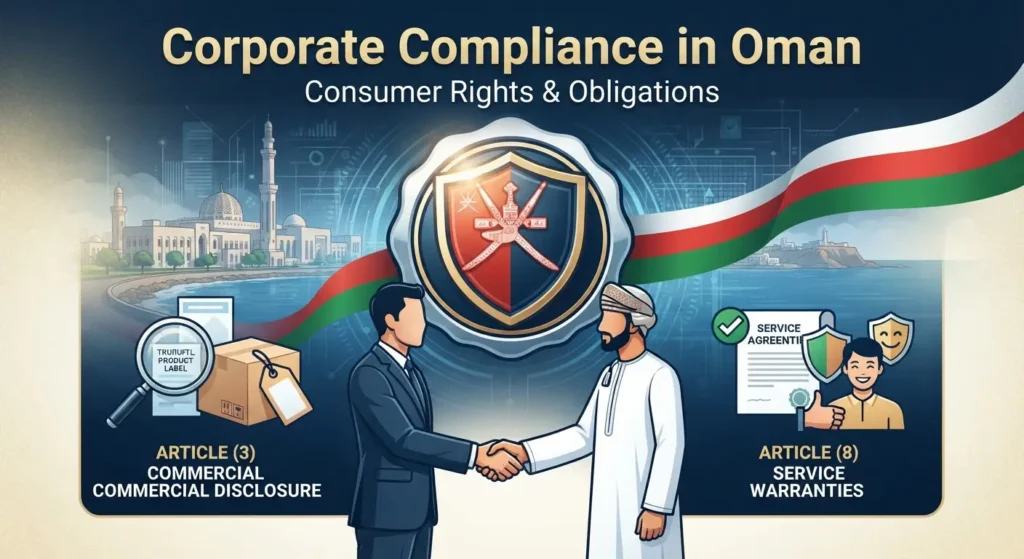
When establishing a business or expanding commercial operations in the Sultanate of Oman, foreign investors and corporate founders must navigate more than just corporate registration laws. Ensuring full compliance with Oman’s consumer protection framework is a critical pillar for long-term business success, brand reputation, and legal security.
Promulgated by Royal Decree No. 66/2014, the Omani Consumer Protection Law establishes strict standards of transparency, fair trade, and accountability. For new corporate entities, understanding core provisions—specifically Articles (3) and (8)—is essential to avoid severe legal penalties and build consumer trust from day one.
1. Transparency and Commercial Disclosure: Article (3)
Article (3) of the Consumer Protection Law forms the bedrock of fair commercial dealings in the Omani market. It emphasizes the consumer’s fundamental right to accurate information regarding any goods or services offered by a commercial enterprise.
Core Legal Principle: Suppliers, business owners, and corporate entities are legally obligated to provide clear, truthful, and non-misleading information about their products and services. This includes accurate labeling, transparent pricing, and clear descriptions of service deliverables.
Impact on Foreign Investors: For companies setting up operations in Oman—whether in retail, e-commerce, or service sectors—marketing materials, contracts, and digital platforms must precisely reflect the nature of goods or services. Just as businesses must carefully manage their commercial headquarters and lease agreements in compliance with updated property rules Comprehensive Guide to Royal Decree No. 12/2025: Reforming Omani Rental Regulations...), misleading advertisements or hidden conditions directly breach Article (3), exposing the company to severe administrative fines and legal liabilities.
2. Service Warranties and Corporate Accountability: Article (8)
While Article (3) focuses on pre-contractual transparency, Article (8) governs post-sale accountability and the performance guarantees that businesses must uphold.
Core Legal Principle: A provider or supplier is mandated to deliver services or execute works properly, adhering to professional standards. Furthermore, Article (8) requires businesses to guarantee the services they provide within a specified timeframe appropriate to the nature of the service. If a defect is found or if the service fails to meet the agreed-upon standard, the provider is legally bound to rectify the flaw, repeat the service properly, or refund the consumer accordingly.
Impact on Foreign Investors: Corporate service providers, contractors, and B2C businesses must implement robust internal quality control and customer service protocols. Establishing clear, written service level agreements (SLAs) and warranty policies aligned with Article (8)—much like understanding property obligations and liabilities Tenant Liabilities and Property Management Under Article (176) of Omani Law)…*—protects the business from legal liabilities and demonstrates a strong commitment to Omani regulatory standards.
Conclusion
Navigating the legal landscape during corporate setup in Oman requires a comprehensive approach to compliance. Adhering strictly to Articles (3) and (8) of the Consumer Protection Law safeguards foreign investments from unexpected legal disputes, enhances consumer confidence, and ensures seamless integration into Oman’s thriving economic ecosystem.
For international investors, partnering with local legal experts ensures that corporate compliance frameworks—from drafting standard terms of service to consumer dispute resolution—are fully aligned with Omani legislation.
Pingback: Turn Idle Equipment into Income