
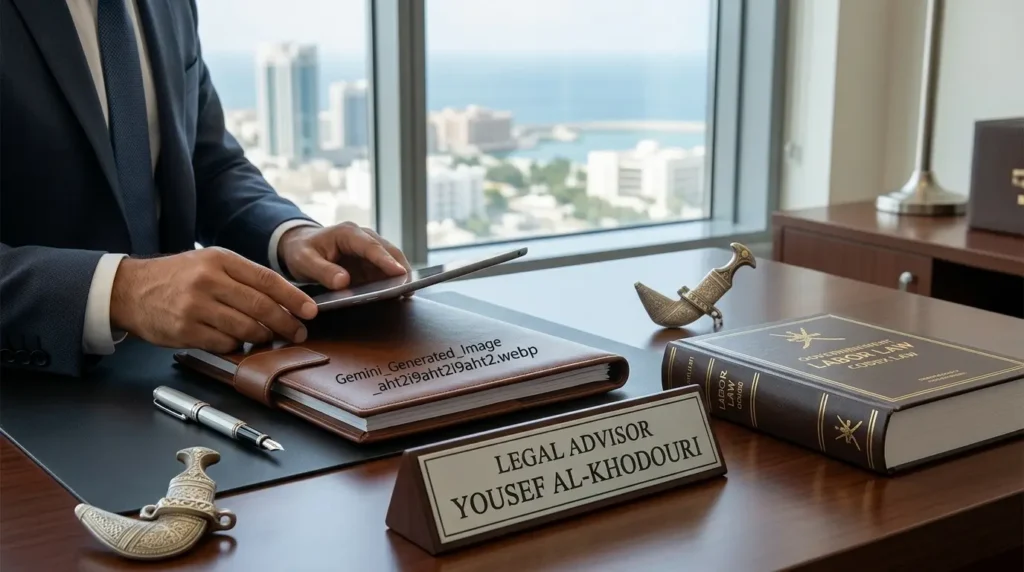
The Sultanate of Oman has witnessed substantial regulatory evolution in its corporate and employment landscapes, cementing its position as a stable and attractive investment hub within the Gulf Cooperation Council (GCC) region. At the core of this vibrant economy is a robust legal framework designed to balance the rights of commercial employers and the protections afforded to a diverse workforce. Managed under the expert guidance of Legal Advisor Yousef Al-Khodouri, our legal practice provides strategic advisory, regulatory compliance, and dispute resolution services tailored to the nuances of Omani legislation.
Whether you are a multinational corporation operating in Muscat, Seeb, or the free zones, or an individual employee navigating workplace rights, understanding the procedural mechanics of the Omani labor regime is vital. This comprehensive guide explores the critical statutory procedures governing labor disputes, mandatory administrative settlements under Article 9, unfair dismissal protocols under Article 10, and the seamless integration of labor execution mechanisms with judicial enforcement standards.
1. The Legal Foundation of Oman Labor Law & Employment Services
Employment relations in Oman are governed by statutory provisions that mandate strict compliance from both employers and employees. Employment contracts, wage structures, workplace safety, and termination protocols must align strictly with the national labor statutes. When commercial disputes arise—ranging from unpaid wages and breach of contract to arbitrary termination—navigating the dispute resolution architecture requires meticulous adherence to pre-litigation mandates.
In professional legal practice, establishing clear internal policies and utilizing professional corporate advisory services prevents protracted litigation. For comprehensive litigation, corporate contracting, and legal representation across the Sultanate, corporate entities and foreign investors can access our dedicated landing portal for Leading Legal Advisory, Litigation & Contract Services in Oman, where our practice delivers custom legal solutions tailored to both national regulations and international business standards.
2. Mandatory Pre-Litigation Settlement: A Critical Analysis of Article 9
One of the most defining procedural rules in Omani labor jurisprudence is the restriction placed on direct judicial recourse. Under Article 9 of the Omani Labor Law, the legal framework establishes a compulsory administrative pre-litigation phase:
Article (9): Lawsuits of labour disputes arising from claiming the rights stipulated in this law and the employment contract shall not be admitted if they are first filed with the concerned court without submitting a settlement application to the competent administrative division in the ministry, so that it endeavours to reach a settlement between its parties in accordance with the provisions of this law, within a maximum period of 30 (thirty) days from the date of submitting the application.
The Administrative Conciliation Process
- Mandatory Application: Prior to filing any labor claim in the competent courts, the aggrieved party must submit a formal settlement application to the competent administrative division within the Ministry of Labor. Direct filing without this step results in non-admission of the lawsuit.
- The 30-Day Window: The Ministry’s administrative division is mandated to facilitate an amicable resolution between the employer and the employee within a strict maximum period of 30 days from the application date.
- Enforceable Conciliation Reports: If a settlement is successfully reached, the agreement is documented in an official report signed by both parties, the competent ministry official, and a delegated judge. Crucially, this report acquires the power of an enforcement document (السند التنفيذي), effectively ending the dispute. In national legal practice, enforcing such administrative instruments relies on the same rigid procedures explained in our authority guide on comprehensive execution services in Oman, ensuring full recovery of entitlements under the Civil and Commercial Procedures Law. Furthermore, tracking the ongoing enforcement files and judicial updates can be seamlessly managed digitally through Oman e-enforcement judicial services.
- Failure of Settlement and Judicial Referral: In the event that conciliation fails, the administrative division is legally bound to refer the dispute to the competent court within 7 days of the final settlement session date. This official referral package must include a comprehensive memorandum detailing the dispute facts, parties’ domiciles, worker wage details, explicit claims, copies of the employment contract, and all supporting evidentiary documents.
Statutory Limitation Period (The One-Year Rule)
Article 9 also establishes a strict prescription period: the right to claim any statutory or contractual labor right expires and is forfeited after the lapse of one year from the date of its entitlement. For rights originating prior to the enactment of the law, the one-year limitation period is calculated from the date the law’s provisions enter into force. This underscores the necessity of prompt legal consultation.
3. Unfair Dismissal and Employee Protections under Article 10
Termination of employment is a sensitive area governed by strict statutory safeguards. When an employer terminates an employment relationship, particularly under contentious circumstances, specific timelines govern the employee’s recourse:
Article (10): The worker who has been dismissed from work may within 30 (thirty) days of the date of his notification of the decision file a complaint to the concerned authority. The latter, i.e. the concerned authority, shall follow the procedures stipulated in article 9 of this law.
Key Takeaways for Dismissed Employees
- The 30-Day Strict Timeline: An employee contesting termination must file a formal complaint with the concerned regulatory authority within 30 days of receiving notification of the dismissal decision. Missing this statutory window can bar the employee from challenging the termination.
- Triggering Article 9 Procedures: Once the complaint is lodged within the 30-day window, the concerned authority initiates the mandatory administrative settlement procedures outlined in Article 9, attempting conciliation before any escalation to the judiciary.
In circumstances where employment disputes involve criminal allegations—such as breach of trust, financial misconduct, or official grievances requiring penal prosecution—recourse extends to state prosecution channels. For detailed insight into criminal filings and official complaints, refer to our comprehensive guide on submitting Public Prosecution complaints in Oman, which details the required legal criteria for formal administrative and criminal remedies.
4. Comprehensive Employment Services & Strategic Legal Advisory
Navigating the complexities of the Omani labor ecosystem requires proactive, structured legal counsel. At our firm, led by Legal Advisor Yousef Al-Khodouri, we provide end-to-end legal support across our specialized category of Oman Labor Law & Employment Services.
Our core service offerings in this domain include:
- Employment Contract Drafting & Review: Ensuring that all employment agreements comply fully with Omani statutory minimums while protecting employer intellectual property, non-compete clauses, and confidentiality.
- Ministry Mediation Representation: Representing clients professionally during the mandatory 30-day administrative conciliation sessions under Article 9 to achieve favorable, binding settlements without costly court litigation.
- Litigation & Dispute Representation: Managing formal court proceedings for wrongful termination, wage arrears, indemnity claims, and employer-employee contractual breaches.
- Regulatory Compliance Audits: Helping businesses review internal HR handbooks, wage protection system (WPS) compliance, and workplace policies to mitigate legal exposure.
Conclusion
The legal framework governing labor and employment in the Sultanate of Oman is designed to foster a balanced, secure, and productive business environment. Compliance with statutory milestones—such as the mandatory 30-day ministry settlement window under Article 9 and the 30-day dismissal complaint window under Article 10—is non-negotiable for safeguarding legal rights.
By partnering with Legal Advisor Yousef Al-Khodouri, businesses and individuals gain a trusted legal ally dedicated to precision, regulatory adherence, and optimal dispute resolution. Explore our complete range of insights and professional offerings across our digital portal to secure your commercial and employment interests in Oman today.
(For official legislative references and statutory text updates, you may also consult the Ministry of Labor Oman Official Portal.)