
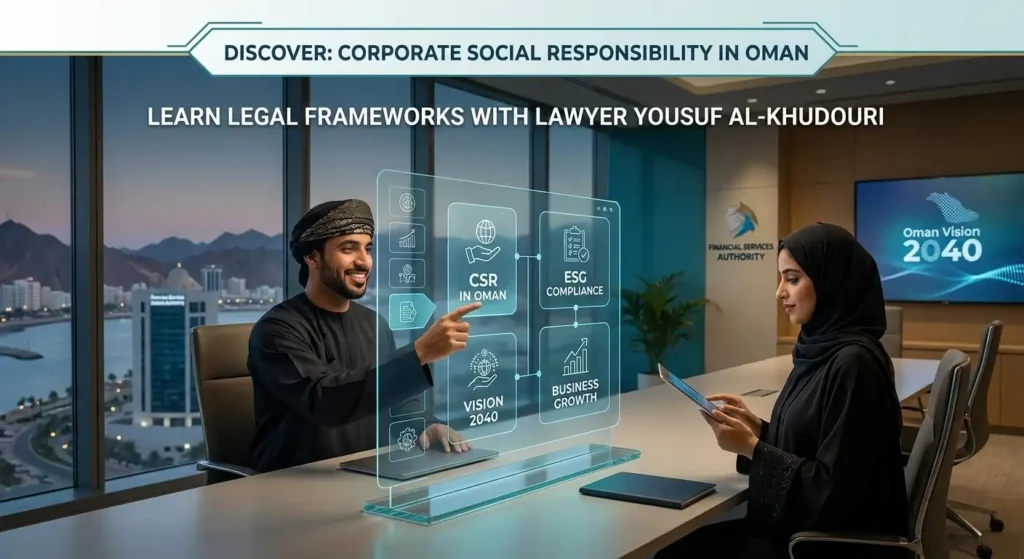
Corporate Social Responsibility in Oman: A Comprehensive Guide to ESG, Legal Compliance, and Vision 2040
As a practicing lawyer and legal consultant in the Sultanate of Oman, I frequently advise corporate entities and investors on the evolving intersection between commercial operations and statutory obligations. Understanding Corporate Social Responsibility in Oman is no longer merely a voluntary philanthropic choice for enterprises; it is a foundational pillar of modern corporate governance, risk management, and sustainable economic growth. As our nation accelerates its structural diversification under Oman Vision 2040, Environmental, Social, and Governance (ESG) criteria have transformed into vital benchmarks for legal compliance and corporate success. In this comprehensive guide, drawn from my legal practice and expertise in Omani commercial regulations, we will explore the core concepts of Corporate Social Responsibility (CSR), analyze the statutory frameworks governing corporate accountability, and demonstrate how strategic legal advisory safeguards enterprise development. What Is Corporate Social Responsibility in Oman? Corporate Social Responsibility in Oman defines the ethical commitment of commercial organizations to conduct operations responsibly, fostering positive impacts on local communities, labor welfare, and environmental preservation. Over recent years, the paradigm of CSR in the Sultanate has matured significantly. The Evolution of Corporate Citizenship in the Omani Market Traditional Philanthropy: Initial corporate efforts in the region focused primarily on charitable donations, grants, and short-term community sponsorships. Strategic Sustainability: Modern enterprises integrate sustainable operational models directly into their core business strategies to manage long-term risks. ESG Integration: Corporations evaluate operational metrics based on rigorous environmental stewardship, social equity, and transparent governance structures. How Does Oman Vision 2040 Shape CSR and Sustainability? The national strategic framework, Oman Vision 2040, places sustainable development, economic resilience, and environmental preservation at the core of the country’s future roadmap. The vision encourages private sector leadership in community empowerment, green technology adoption, and economic diversification. Key pillars aligning corporate responsibility with national goals include Environmental Stewardship: Reducing carbon footprints, managing waste efficiently, and transitioning toward renewable energy resources. Human Capital Enhancement: Investing in national workforce training, youth empowerment, and advancing In-Country Value (ICV) initiatives. Community Development: Funding localized educational, healthcare, and infrastructure projects across regional governorates. What Is the Legal and Regulatory Framework for CSR in Oman? While corporate responsibility is driven by organizational ethics, it is heavily supported by robust statutory laws and regulatory authorities across the Sultanate. 1. Commercial Companies and Governance Laws The legislative foundation for corporate conduct is anchored in Omani commercial laws. To examine statutory decrees and official regulations, businesses regularly reference the Oman Portal, which serves as the official gateway for legislative frameworks and administrative procedures regulating commercial enterprises. 2. Financial Services Authority (FSA) Oversight Public joint-stock companies operate under the regulatory codes established by the Financial Services Authority (FSA), the primary administrative regulator overseeing capital markets, corporate governance, and insurance sectors. The FSA enforces strict transparency, board accountability, and ESG reporting standards. 3. Labor Regulations and Omanisation Omani labor legislation mandates rigorous standards regarding workplace safety, fair employment contracts, and prioritized recruitment of national talent to fulfill national employment targets. 💡 Legal & Corporate Consultation Breakpoint Navigating complex corporate compliance, regulatory adjustments, and governance contracts requires expert legal oversight. To safeguard your enterprise and ensure total alignment with local statutory frameworks, collaborate with trusted legal professionals. Discover our specialized corporate solutions through our legal advisory and contract services in Oman. Why Is ESG Compliance Crucial for Omani Enterprises? Integrating robust Environmental, Social, and Governance practices into corporate operations yields distinct commercial and legal advantages: Risk Mitigation: Proactively manages regulatory, financial, and environmental liabilities under Omani law. Capital Attraction: International and regional institutional investors increasingly prioritize companies with verified ESG ratings and compliance records. Brand Reputation: Enhances consumer trust and strengthens stakeholder relationships across the competitive local market. Operational Efficiency: Optimizes resource consumption, reduces waste, and lowers long-term operational costs. What Are the Core Pillars of Corporate Governance and CSR? To establish a successful CSR strategy in Oman, organizations must focus on four foundational pillars: In-Country Value (ICV): Prioritizing local procurement, local suppliers, and national sub-contractors to stimulate internal market growth. Workplace Health and Safety: Adhering strictly to industrial safety protocols, occupational health standards, and labor welfare rules. Supply Chain Integrity: Ensuring third-party vendors and commercial partners uphold fair employment and environmental practices. Transparent Disclosures: Publishing audited reports detailing CSR expenditures, sustainability metrics, and measurable community outcomes. Resolving Corporate Disputes and Statutory Compliance in Oman As corporations expand their commercial activities and sustainability initiatives across the Sultanate, legal disputes concerning contracts, employment relations, or regulatory enforcement may occasionally arise. Resolving these matters requires strict adherence to Omani judicial procedures and commercial litigation practices. As Legal Advisor Yousuf Al-Khudouri, I emphasize that when corporate irregularities, contractual breaches, or legal conflicts occur, engaging qualified legal representation ensures that commercial rights are fully protected before judicial bodies, administrative committees, and enforcement courts, ensuring long-term business continuity. How Can Businesses Implement an Effective CSR Strategy in Oman? To ensure your corporate responsibility initiatives deliver maximum social value while maintaining absolute regulatory compliance, follow this structured roadmap: Step 1: Conduct a Materiality Assessment Identify the specific environmental, social, and legal issues that directly affect your industry sector and local stakeholders in Oman. Step 2: Align with National Priorities Ensure your organizational CSR goals directly support the strategic objectives outlined in Oman Vision 2040. Step 3: Embed Compliance into Commercial Contracts Incorporate sustainability commitments, ethical codes, and Omanisation standards directly into vendor agreements, corporate bylaws, and partnership contracts. Step 4: Monitor and Report Establish clear Key Performance Indicators (KPIs) to measure social impact, and publish your findings in annual corporate governance filings. Conclusion Corporate Social Responsibility in Oman represents a powerful catalyst for sustainable business success and national economic diversification. By aligning corporate strategies with Oman Vision 2040 and maintaining rigorous ESG standards, enterprises can secure a competitive advantage while contributing meaningfully to society. 🏛️ Protect Your Business Investment in the Sultanate Building a sustainable, compliant, and legally secure enterprise in Oman requires expert counsel and structured legal foundations. Legal Advisor Yousuf Al-Khudouri provides premier legal guidance in corporate governance, commercial litigation, arbitration, and contract optimization across Muscat