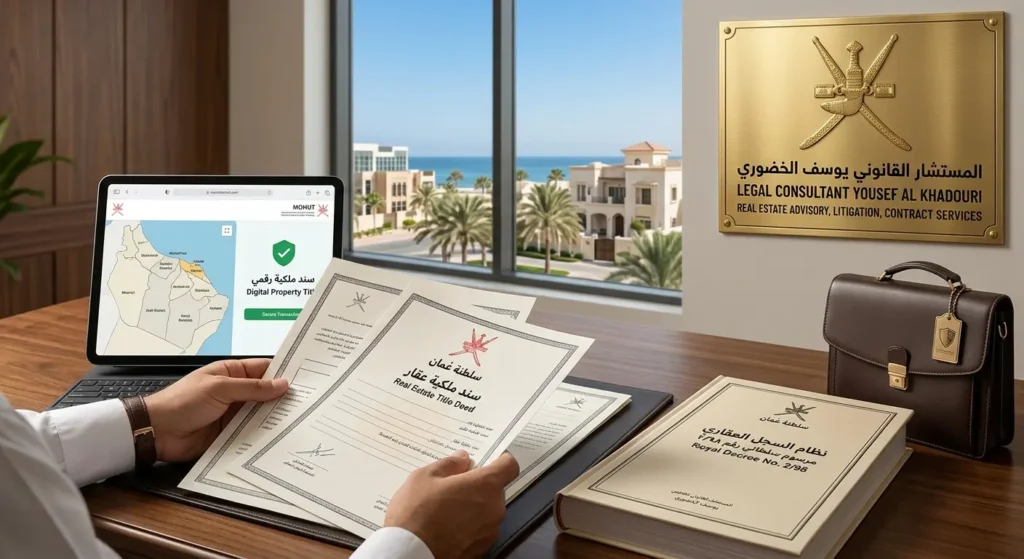

Oman Real Estate Registration System: A Comprehensive Legal Guide to Royal Decree 2/98 and Secure Property Acquisition
Understanding the Oman Real Estate Registration System is the single most critical step for any investor, homeowner, or corporate entity looking to buy, sell, or transfer property in the Sultanate of Oman. Governed primarily by Royal Decree No. 2/98, this foundational legal framework establishes strict statutory mechanisms to regulate property ownership, protect real rights, and ensure absolute transactional stability across the Omani real estate market. Whether you are acquiring a residential home or commercial land, knowing how the Land Registry operates guarantees that your investment is shielded from disputes, hidden encumbrances, and title defects. In this detailed legal guide, we break down the core general provisions of Royal Decree No. 2/98—specifically Articles 1, 2, and 3—while illustrating how legal due diligence translates into real-world buyer protection when acquiring prime real estate in Muscat. What is Royal Decree No. 2/98 on the Oman Real Estate Registration System? Royal Decree No. 2/98, officially promulgating the Real Estate Registration System (نظام السجل العقاري), serves as the cornerstone of property law in the Sultanate of Oman. Enacted to modernize and formalize land administration, the decree replaced fragmented recording practices with a centralized, authoritative, and legally binding folio system. You can review the official Arabic legislative text of Royal Decree No. 2/98 promulgating the Real Estate Registration System directly through Oman’s primary legal portal. Under Omani jurisprudence, real estate rights are not merely established by private contracts between a buyer and a seller; rather, legal title and real rights only take full legal effect once properly recorded in the official registry maintained by the Ministry of Housing and Urban Planning. Why is Statutory Property Registration Essential in Oman? Absolute Legal Certainty: Registration provides conclusive proof of ownership, protecting buyers against competing claims. Transparency of Encumbrances: Any mortgages, easements, liens, or judicial freezes attached to a property must be recorded on its official sheet, preventing sellers from concealing financial or legal burdens. Market Stability: By standardizing how real estate transactions are verified and documented, the system fosters confidence among domestic buyers, GCC nationals, and international investors. What Are the Core Provisions of Chapter One of the Real Estate Registration System? Chapter One of the Real Estate Registration System sets forth the general provisions (أحكام عامة) that define the purpose, structure, and administrative authority of the registry. Specifically, Articles 1, 2, and 3 establish the legal architecture upon which every property transaction in Oman rests. Article 1: Protecting Ownership and Real Rights Article (1) of Royal Decree 2/98 states: “The system aims to regulate the right of ownership and other real rights pertaining to the real estate unit in a manner that achieves the necessary protection for real estate ownership and other real rights, and ensures their stability and transactions thereon.” Legal Analysis of Article 1: This opening provision defines the dual mandate of the Oman Real Estate Registration System: protection and stability. In civil law jurisdictions like Oman, “real rights” (الحقوق العينية) encompass both primary rights—most notably absolute ownership (الملكية)—and accessory real rights, such as mortgages (الرهن), usufruct (الانتفاع), and easements (حقوق الارتفاق). By legally regulating every right attached to a specific real estate unit (الوحدة العقارية), Article 1 ensures that once a title is registered, the owner enjoys state-backed security against unlawful dispossession or unrecorded third-party claims. Article 2: The Structure of Real Estate Sheets and Registration Records Article (2) of Royal Decree 2/98 stipulates: “The Real Estate Register is a collection of sheets, each dedicated to a specific real estate unit, and registration documents and minutes are considered complementary to the Real Estate Register.” Legal Analysis of Article 2: Oman adopts the Torrens-inspired “Real Folio” system (نظام السجل العيني) rather than a personal index system. Instead of indexing records merely by the names of individuals, the registry assigns a unique, permanent sheet (صحيفة عقارية) to each physical plot of land or real estate unit. Furthermore, Article 2 clarifies that the legal file does not stop at the summary sheet itself. All supporting registration documents (وثائق التسجيل) and official minutes (محاضر التسجيل)—including sale deeds, inheritance decrees, survey maps (Krooki), and power of attorney instruments—form an inseparable, complementary part of the register. For a legal practitioner conducting due diligence, examining both the primary folio and its complementary minutes is vital to confirm a clean chain of title. Article 3: The Role of the Real Estate Registry Secretariat Article (3) of Royal Decree 2/98 mandates: “The Secretariat of the Real Estate Registry and its branches shall undertake the work of the real estate register in accordance with the provisions of this system.” Legal Analysis of Article 3: Article 3 designates the institutional authority responsible for executing the law. The Secretariat of the Real Estate Registry (أمانة السجل العقاري) and its regional branches across the governorates of Oman hold exclusive statutory jurisdiction over recording title transfers, issuing official title deeds (المليكة), registering mortgages, and certifying extracts from the registry. No private entity or unaccredited intermediary can legally alter the status of a real estate unit outside the formal procedures supervised by the Secretariat. How Does Legal Due Diligence Apply the Real Estate Registration System in Practice? While Articles 1, 2, and 3 provide robust statutory safeguards, buyers must still verify that a specific property complies with every requirement of the Oman Real Estate Registration System before signing a purchase agreement or transferring funds. Skipping legal verification can expose buyers to delays caused by unrecorded inheritance disputes, municipal zoning violations, or unreleased bank mortgages. To understand the broader step-by-step procedures for verifying titles, calculating registration fees, and completing transfers safely, explore our comprehensive resource on Real Estate Ownership in Oman: Complete Guide to Legal Registration and Verified Property Acquisition. Need Legal Verification Before Buying Property in Oman? Navigating property transfers, reviewing title deeds, and drafting ironclad sale contracts require experienced legal oversight. Consult with Lawyer Yousef Al Khadouri through our dedicated portal for Leading Legal Advisory, Litigation & Contract Services in Oman to protect your real estate and commercial investments across the Sultanate. Case Study in Legal Verification: